


Coaxial Cable
Why Choose Us
Our History
Company have focused on cable assembly and wire harness industry over 8 years in China. We started small business such as many small electric wires manufacturing, but now we become one of the leading ship manufactures in cable assembly industry.
Our Factory
Is located in Huizhou City Guangdong Province China, a beautiful city which has complete supply chain. We supply high quality and competitive cost cable assembly and wire harness products to customers all over the world.
Production Market
We have customers from both domestic market and oversea market. have professional sales managers can speak fluent English for good communication with oversea customers, also can provide professional technical support to customers.
Our Service
Can provide OEM/ODM on cable assembly and wire harness products, provide design, DFMEA/PFMEA support for customer, also we provide good after sell service for customers.
What is Coaxial Cable?
Coaxial cable is typically used by cable operators, telephone companies, and internet providers to transmit data, video, and voice communications to customers. Its installation and implementation are easy but it is less efficient than optical fiber also it provides moderately high bandwidth in comparison to optical fiber.


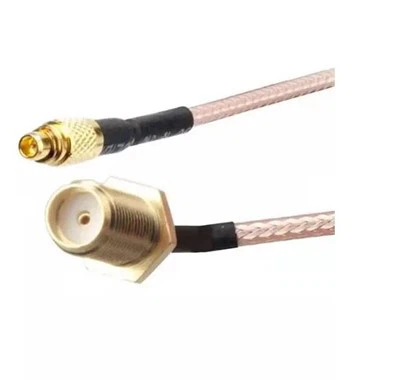


Hardline coaxial cable
Hardline coaxial cable’s center conductor is made of copper, silver and has a larger diameter when compared to other coaxial cables.
Flexible coaxial cable
The flexible coaxial cables are very flexible and the inner conductor is surrounded by a flexible polymer.
Semi-rigid coaxial cable
Semi-rigid coaxial cable uses a solid copper outer sheath with a dielectric of Polytetrafluoroethylene.
Formable coaxial cable
It is an alternative to semi-rigid cable, instead of a rigid copper outer sheath a flexible metal sheath is utilized.
Twinaxial cable
It has two central conductors in the core and a single outer core and dielectric. these cables are best for low-frequency digital and video transmission.
Triaxial cable
It is also known as Triax. It is very much similar to a coaxial cable but with an additional copper braid added to it, the braid works as a shield and protects from noise. Triaxial cables offer more bandwidth.
Rigid coaxial cable
Rigid coaxial cable is made up of two copper tubes supported at cable ends and fixed intervals across the length of the cable using PTFE supports or disk insulators. The rigid coaxial cable cannot be bent. It is mainly used in TV and FM broadcasting systems.

How Is It Coaxial Cable Used?
Center conductor - Copper-clad steel.
Center conductor bond - Clean stripping polymer is utilized to block moisture migration.
Dielectric - Polyethylene, closed-cell foam with high VP providing mechanical stability.
First outer conductor - An aluminum-polymer-aluminum tape securely bonded to the dielectric.
Second outer conductor - A 34 or 36 AWG aluminum braid.
Third outer conductor - An additional aluminum-polymer-aluminum tape is used in tri-shield and quad-shield constructions to further enhance HF shield isolation before and after flexure.
Fourth outer conductor (optional)
An additional 34 or 36 AWG aluminum braid is used in quad-shield constructions to further improve LF shield isolation in extreme RF noise environments.
Indoor and aerial
A non-drip material designed to prevent corrosion of metallic components of the cable.
Jacket
A UV stable outer jacket of either polyethylene (PE) or flame retardant polyvinyl chloride (PVC) to protect the core during the life of the cable.
Integral messenger
A galvanized, carbon steel wire support member attached to the cable by a separable web.
Benefits of Coax Cable
Low Signal Loss
Coaxial cable has a low signal loss rate; thus, even over long distances, the signal is strong. As a result, it is perfect for usage in situations where signals must be sent over great distances, such as cable TV networks.
High Bandwidth
Coaxial cable has a high bandwidth, allowing for the quick and efficient transmission of enormous amounts of data. This makes it perfect for usage in data-intensive applications and high-speed internet connections.
Immune to Interference
Coaxial cable is impervious to interference from outside sources, including radio and electromagnetic interference. This makes it perfect for usage in noisy electrical conditions, like those found next to power lines or in factories.
Versatile
Coaxial cable has many uses, including high-speed internet connections, cable TV networks, and security systems.
Key Factors to Consider When Choosing a Coaxial Cable
Application — How will you be using your cable? Certain types are designated for specific applications, such as signal transmission for military operations, while others are designed for general use. Consider if your application will require short- or long-range transmission, as well as high or low frequencies.
Impedance — Impedance refers to an electrical circuit’s resistance to alternating currents, expressed in ohms. Impedance should match throughout all components of a coaxial cable system to help prevent echoes, signal attenuation, and ghosting television images.
Environment — Cables installed underground should pass through waterproof pipes to protect the jackets from liquid and vapor permeation. Users can also employ waterproof cords with self-amalgamating tape. To provide relief from sunlight and corrosive vapors, some manufacturers make use of hardened polyethylene cables, as well as tin and silver coatings.
Working voltage and power rating — A coaxial cable’s voltage travels through the center wire or conductor. Each cable has a calculated maximum or “peak” voltage, which is then slightly reduced as a safety precaution.
Signal loss at specific frequencies — Coaxial cable lines can be susceptible to signal loss at very high frequencies (VHF) and ultra-high (UHF) frequencies. Some manufacturers provide a foil or braided shield for VHF and UHF interference protection.
What are Coaxial Cables used for?
Coaxial cable for TV: Poor quality coaxial cable can impact TV reception, so it’s important to choose the best cable for the job.
Coaxial cable for HDTV (high-definition): The best coaxial cable for HDTV isRG-11.
This type of cable offers a higher gauge than others, which provides more space for signals to transfer. This makes RG-11 cable adept at transferring strong HD signals at speed.
Coaxial cable for the internet: Coaxial cables can be used to carry signals for internet connections, but internet signals run at higher frequencies than traditional analogue video.
RG-6 cable was designed to fulfil this requirement. It has a larger conductor, which provides a much better signal quality, and the dielectric insulation is thicker. RG-6 cables are also made with a different kind of shielding, which means they can carry GHz level signals more effectively.
Coaxial cable for CCTV: RG-59 coaxial cable is the best type for CCTV systems, but RG-6 can also be used.
RG-6 can run longer distances than RG-59 without loss to a video signal, however, it’s a thicker, firmer cable that isn’t as convenient to work with.
Coaxial cable for video: The most common types of coaxial cable for video are RG-59 and RG-6. Of these, RG-59 is the industry standard cable, whereas RG-6 is better for digital video signals.
How is coaxial cable installed and maintained, and what tools are needed?
Pre-Installation Planning
Before starting the installation process, thorough planning is essential. Understand the requirements of the network, including the length of cable needed, the signal strength, and the specific connectors and adapters required. Ensure you have all the necessary equipment and tools for the installation process.
Site Survey
Perform a site survey to determine the best route for the cable and identify any potential obstacles or interference sources. This survey helps in estimating the cable length required and assists in selecting the appropriate cable type for the specific application.
Gather Tools and Equipment
For coaxial cable installation, you will need the following tools:
a. Coaxial Cable: Choose a high-quality, suitable coaxial cable based on the application and signal requirements.
b. Connectors and Adapters: Select connectors and adapters compatible with the coaxial cable and the devices being connected.
c. Cable Cutter: A tool to cut the coaxial cable to the desired length accurately.
d. Cable Stripping Tool: Used to remove the outer jacket and shield from the cable, exposing the core conductor.
e. Compression Tool: Required for attaching connectors securely to the cable.
f. Crimp Tool: An alternative to compression tools for attaching connectors to the cable.
g. Coaxial Cable Tester: Essential for verifying the continuity and signal strength of the installed cable.
h. Fish Tape or Pull Cord: Used to guide the cable through conduits or tight spaces.
Installation Steps
a. Prepare the cable: Measure and cut the coaxial cable to the required length, leaving some extra slack for potential adjustments.
b. Strip the cable: Use the cable stripping tool to carefully remove the outer jacket and shielding, exposing the inner conductor.
c. Attach connectors: Depending on the connectors chosen, either compress or crimp them onto the stripped ends of the cable.
d. Route the cable: Carefully run the cable along the planned path, avoiding sharp bends and potential sources of interference.
e. Terminate the cable: Connect the other end of the cable to the appropriate devices, such as modems, TVs, or routers.
f. Test the installation: Use a coaxial cable tester to verify the continuity and signal quality of the installed cable.
Routine Inspection
Regular inspections are crucial to identify potential issues and ensure the network's uninterrupted performance. Inspect the coaxial cables and connectors for any signs of wear, corrosion, or physical damage. Check for loose connections and tighten them if necessary.
Signal Testing
Periodically test the signal strength and quality using a cable tester. This helps in detecting signal losses, impedance mismatches, or potential issues within the cable.
Cleaning
Keep the cables and connectors clean to prevent signal degradation. Use a lint-free cloth and appropriate cleaning solutions to wipe off any dirt or dust accumulated on the connectors.
Cable Management
Proper cable management prevents unnecessary stress on the cables and connectors. Use cable ties or clips to secure the coaxial cables neatly and avoid kinks or twists.
Protection from Environmental Factors
Ensure that the coaxial cables are adequately protected from harsh weather conditions, excessive heat, or water exposure. Install weatherproofing materials around connectors and junctions if needed.
Repairs and Replacements
If any coaxial cable or connector shows signs of damage or degradation, replace it immediately. Promptly repair any damaged parts to maintain the network's integrity.
Cable Type and Size
Coax cables come in various sizes and types, denoted by numbers (e.g., 2/12–27). The first number represents the cable’s diameter, while the second number indicates the number of shielding layers. Choosing the right size and type is crucial for optimal transmission lines.
Coaxial Cable Connectors
Consider the coaxial connectors required for your specific application. Different devices and systems may use various coaxial cable connector types, so compatibility is essential.
Signal Frequency and Transmission Speed
The frequency of the signals you plan to transmit and the required transmission speed are critical factors. High-frequency signals may require specialized coaxial cables with better shielding to minimize signal loss.
Electromagnetic Interference EMI
Choose coaxial cables designed to reduce electromagnetic interference. For applications where EMI is a concern, choose cables with superior shielding to maintain signal quality.
Coaxial Cable Advantages
Understand the advantages of coaxial cables, such as their ability to transmit RF signals over long distances with minimal signal loss compared to other cable types.
Compatibility with Devices
Ensure the chosen coaxial cable is compatible with your devices and equipment, including TVs, radios, routers, and signal boosters.
Durability and Installation
Consider the cable’s durability outdoors or in harsh environments. Additionally, assess the ease of installation to avoid complications during setup.
Cost and Budget
Coaxial cable prices vary significantly depending on the quality and specifications. Establish your budget and ensure it aligns with your specific needs and priorities.
Certifications


Our Factory
We started small business such as many small electric wires manufacturing, but now we become one of the leading ship manufactures in cable assembly industry. Today we have been one of the high quality cable assembly and wire harness manufacture in China.


FAQ